
 Tree Stand Placement Strategies: Where to Hang for Maximum Deer Encounters
By Ryan Fair
There are plenty of ways to ruin a good stand location, and most of them happen before you ever climb into it. I have hung stands over trails that looked almost too good to fail. Tracks everywhere. Rubs on both sides. Fresh droppings under the tree. Then I hunted the spot and watched deer slip past just out of range, come in from the wrong direction, or disappear after the first sit. A tree can look perfect and still be the wrong tree.
Good tree stand placement is not just about hanging it close to deer sign. It has to account for wind, access, cover, shot opportunities, and be where deer are likely to be during daylight. Miss one of those pieces and a promising setup can go bad in a hurry.
Figure Out Your Access
Before I pick a tree, I want to know how I am getting in and out. That is easy to overlook when a trail is covered in tracks or a fresh scrape is nearby. The natural reaction is to hang as close as possible. Sometimes that works. Other times it puts you in a spot where every hunt starts by crossing the same trail you expect a buck to use. That stand usually does not stay good for long.
The best access routes use something to hide your movement. A ditch, creek bank, fence row, standing crop, or low spot in a field can keep you out of sight. I also try to avoid walking through the downwind side of bedding cover, even if it means taking the long way around.
Leaving can be tougher than getting in. Food-source stands are a good example. You may have a clean entrance in the afternoon, only to end the hunt with deer feeding all around you. Climbing down and walking through them can burn the location faster than the hunt itself. Sometimes I wait them out. Other times I have someone drive nearby and let the vehicle move them off. It may seem like a small detail, but clean exits keep good stands from turning cold.
Do Not Fight the Wind
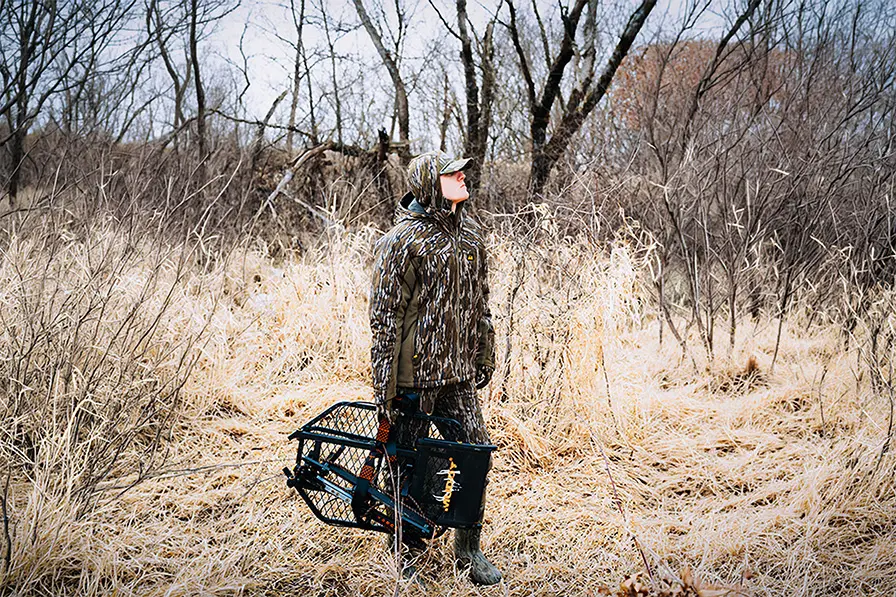
Wind matters more than height, cover, comfort, or how much sign is under the stand. I would rather hunt a slightly weaker location with the right wind than sit over the best trail on the farm while my scent blows into bedding cover. Mature deer do not need many warnings before they change how they use an area. Crosswinds are often my favorite. They let me stay off the trail while still covering it, and they give a buck room to move without walking directly into my scent.
It is also worth remembering that deer use the wind too. A buck may travel the downwind edge of a bedding area or swing below a food source before stepping into the open. If you hang directly over the obvious trail, he may pass behind you while scent-checking everything ahead.
Thermals can make hill-country setups tricky. Morning air tends to rise as the ground warms. Later in the day, cooling air drops toward lower ground. A stand can be fine for the first hour and wrong by the time deer start moving. This is something I try to learn before season, not while a buck is standing downwind blowing at me.
Look for Places That Tighten Movement
Funnels are hard to beat because they limit a deer’s options. A creek crossing, narrow strip of timber, fence opening, ditch, steep bank, or inside field corner can pull several trails into one smaller area. Those spots are easy to get excited about, but I still pay attention to how bucks use them compared to does.
The heaviest trail is not always the best one. Mature bucks often skirt the main path and use a faint trail just inside the cover. It may run 20 yards off the obvious route and have half the tracks, but it can offer the security a buck wants during daylight.
Edges are another place I spend time. Thick cover meeting open woods, young timber against mature timber, or brush lining a food source can all create natural travel routes. Deer like to keep cover close, especially once hunting pressure builds. When several things come together, I start getting serious. A trail by itself is worth watching. A trail with rubs, a scrape, tracks, and nearby bedding cover is a different story.
Setting a Ladder Stand
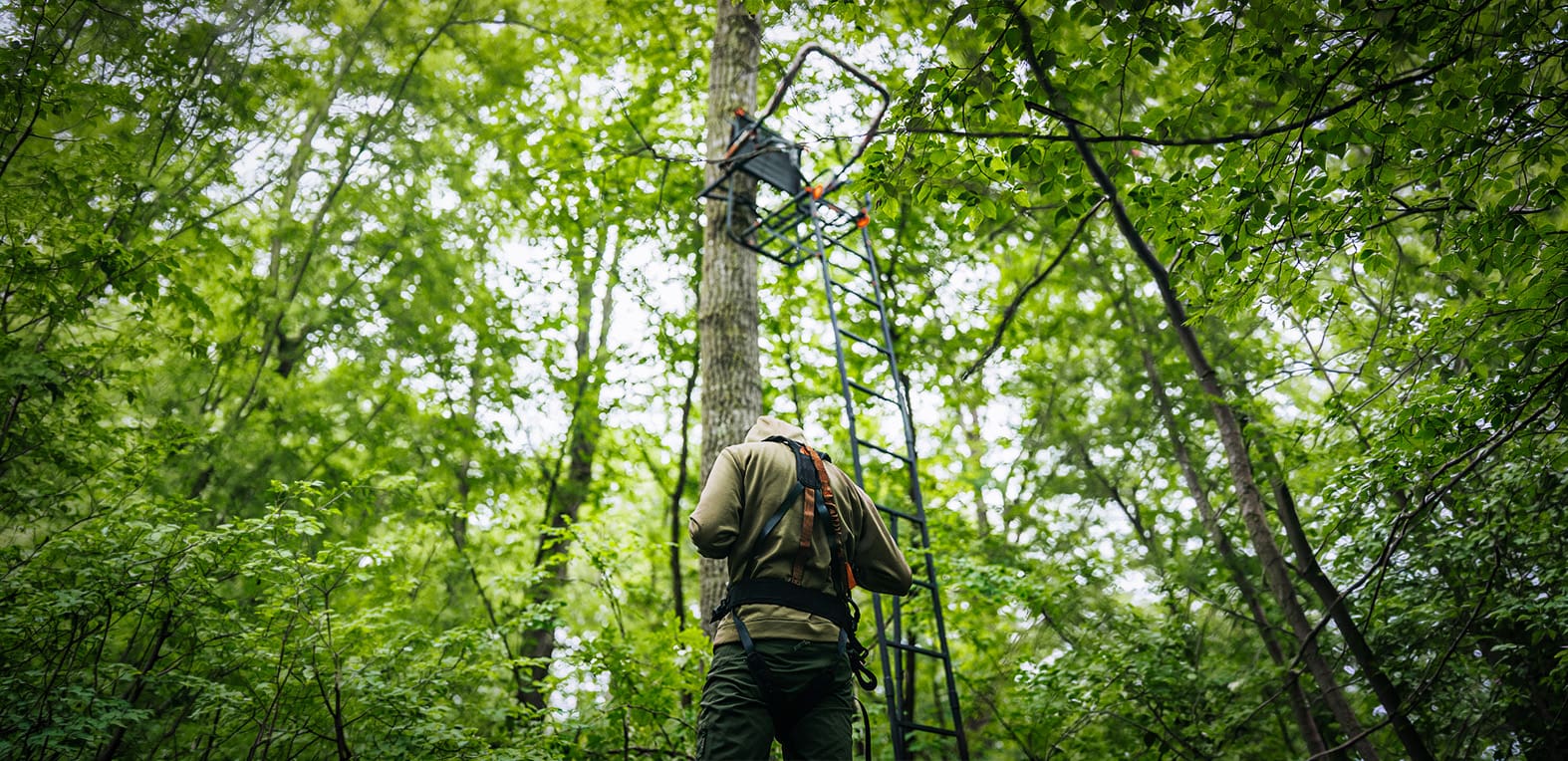
Ladder stands work well in places where the travel pattern is dependable and you expect to hunt the setup more than once. A Muddy ladder stand is a good fit along field edges, creek crossings, funnels, and family hunting spots where a solid platform matters. I like them for locations that do not require much adjustment once season begins.
They are larger than a hang-on, so I try to put them up early. That way the stand has time to blend into the area, and deer get used to seeing it. When hanging a ladder stand remember, the tree still matters. A bare trunk on an open field edge will leave you looking like a person sitting on a ladder. I would rather have limbs, vines, split trunks, or another tree behind me to break up my outline.
When it comes to field-edge ladder stands they are usually better when they are pulled back into the woods. Instead of watching the middle of the food source, I want to cover the trail deer use before stepping out. Those staging areas can produce earlier movement, especially from older bucks that wait until dark before entering the open. When making shooting lanes do not trim the whole tree clean. Open the shots you need, then stop cutting. A little clutter around the stand helps hide movement. Lastly, don’t forget about your harness and a lifeline. Regardless of how high you are it only takes one slip to ruin a hunting season.
Hanging a Stand in Tight Cover
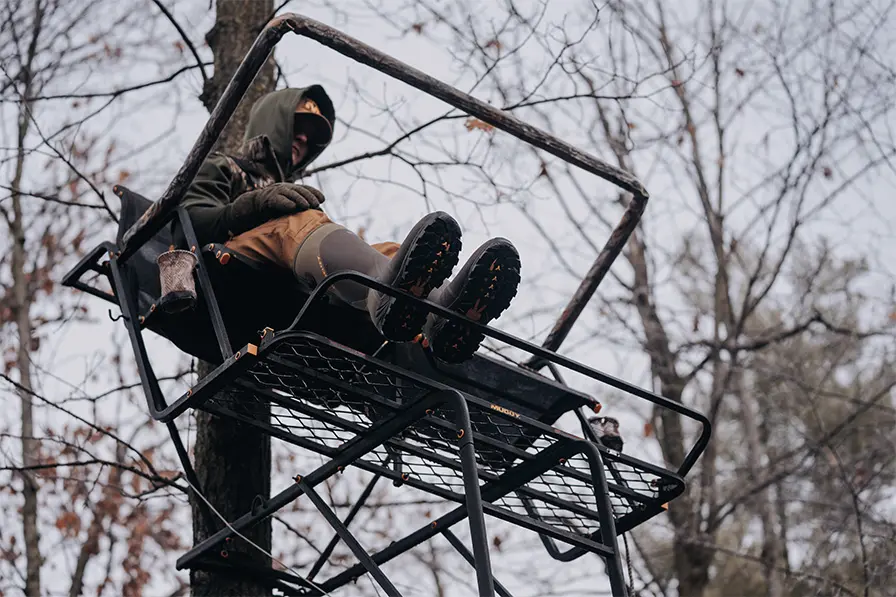
Hang-on stands give you more options when deer movement is tight or the right tree sits away from an easy ladder location. Muddy hang-on stands can be tucked into a funnel, along a secondary trail, or just off the edge of bedding cover. Those setups often require more thought because shot angles come fast and deer may be close before you see them. For this reason, I try to picture the entire encounter before hanging the stand.
Where will the deer first appear? Which way will it likely be facing? When will I need to stand? Can I draw without being exposed? Is there a tree trunk between me and the trail? A stand directly over a trail may sound ideal, but it can create poor bow angles and put the deer right underneath you. Moving back a few yards often gives you a better shot and more time to get ready.
Height depends on the tree and the cover. I do not climb high just for the sake of climbing high. In thick cover, 15 feet may hide you better than 22 feet in a bare tree. I want enough height to stay above a deer’s normal line of sight without creating a steep, difficult shot.
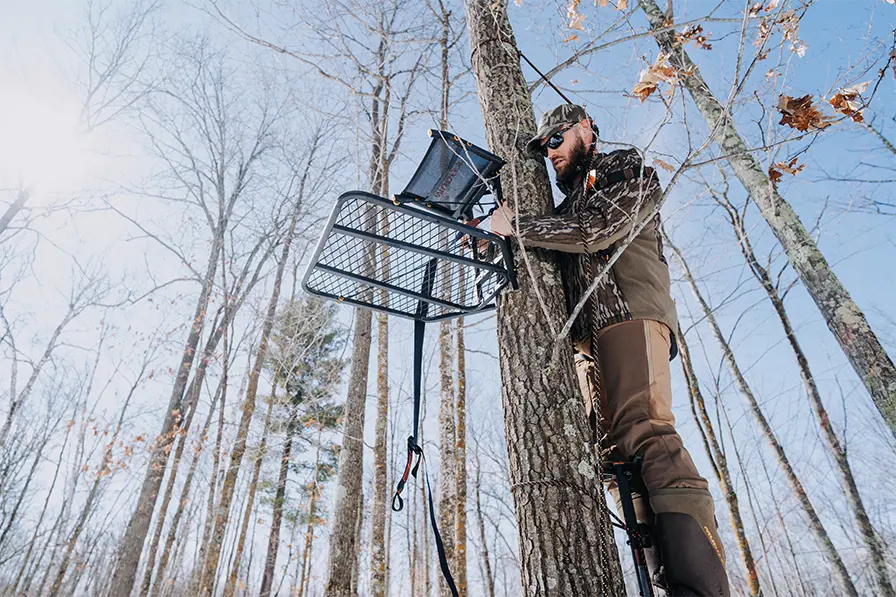
Every hang-on setup also needs to be safe from the ground up. I use a full-body harness and stay connected while climbing. Straps, steps, ropes, and attachment points get checked before the season and again throughout the fall. That part is not optional.
Keep the Stand Fresh
A good stand is easy to overhunt because it feels like something should happen every time you sit there. This is usually when hunters start forcing it. Some stands can handle pressure while others cannot. A field edge with easy access may stay productive all season. A setup tight to bedding cover may only be worth hunting when everything lines up. I pay attention to what deer tell me. If they start staring at the tree, hanging back, or changing direction, the setup may already be slipping. Backing out for a while can save it.
The best stands are often the ones you leave alone until the timing is right. A cold front, falling temperatures, a steady wind, or a jump in rut activity can be enough to put a buck on his feet earlier than normal. That is when I want to hunt my best tree, not three days before because I was impatient.
Tree stand placement is a mix of small decisions. The right tree helps, but access, wind, cover, and timing matter just as much. Put a Muddy ladder stand on a reliable route or tuck a hang-on into a tight travel corridor, but make sure the whole setup works together. The goal is simple: get close enough for an encounter without letting the deer know you are there.