
Hunting scrapes and rubs is an exciting and highly effective tactic during the whitetail deer rut. Like many hunters, my father introduced me to the art of finding buck sign. Often, when hunting with my dad, we would stop to observe a shredded sapling or admire the size of a scrape that a resident buck had made. This gave us hope that we were near a buck and on the right path to intercept his travel route while giving ourselves the best possibility to make a harvest. Years later, we discovered the true understanding of the significance of scrapes and rubs, and knowing the best times to hunt these areas can increase a hunter’s odds of crossing paths with a mature buck. Scrapes and rubs are not just random markings in the woods; while they serve as essential communication hubs for deer, particularly bucks, as they signal dominance, define territory, and attract potential mates, they also become puzzle pieces or clues that can help lead hunters to the treasure, which is harvesting a mature buck.
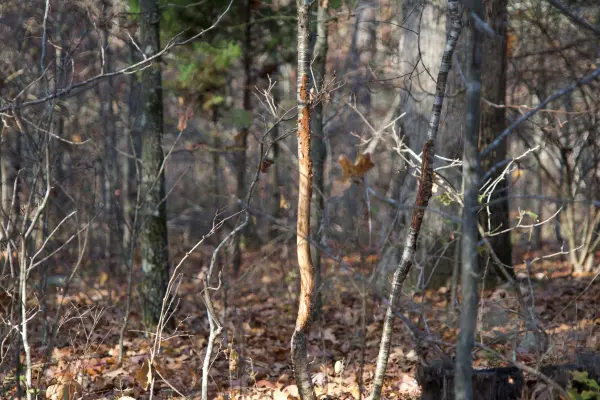
The Difference Between Scrapes and Rubs
First, let’s go back in time to when our parents, grandparent, or other mentors first taught us the difference between scrapes and rubs.
- Scrapes: Scrapes are areas of bare earth where bucks paw the ground, usually under an overhanging branch. They are often marked with buck urine and scent from their forehead glands. Bucks (and sometimes does) visit scrapes to leave scent, allowing deer to communicate with each other.
- Rubs: Rubs are created when bucks scrape their antlers on trees or shrubs. This helps bucks remove the velvet from their antlers earlier in the season and allows them to mark territory with scent glands on their face. Rubs are often seen along travel corridors, serving as territorial markers, and can sometimes indicate the presence of a larger, more dominant buck.
Early Season (Pre-Rut) – Mid-September to Mid-October
In the early season, rubs start to pop up more frequently as bucks shed velvet and establish dominance. During this time, bucks are primarily focused on food sources but also begin laying down rubs to mark territory. Scrapes can be found many times of the year, even in the summer. But they are less common and less meaningful until the pre-rut intensifies.
Early-season bucks tend to visit rubs as they travel to and from feeding areas in the evening. Setting up along known rub lines that lead to food sources can be highly effective.
Bucks are less likely to move during midday unless they’re bedding near a food source or water. These times can yield encounters with bucks visiting rubs while transitioning.
While mature bucks are primarily nocturnal during the early season, catching them on a pattern before transitioning into full pre-rut mode can lead to success.
Pre-Rut – Late October to Early November
The pre-rut is a hunter’s favorite time to hunt because buck activity around scrapes and rubs really picks up. Testosterone levels rise, and bucks begin actively seeking out does while continuing to establish dominance. This is also when bucks start using community scrapes and checking for receptive does, providing excellent opportunities to use a Muddy cellular camera, such as the Matrix, to monitor bucks using scrapes.
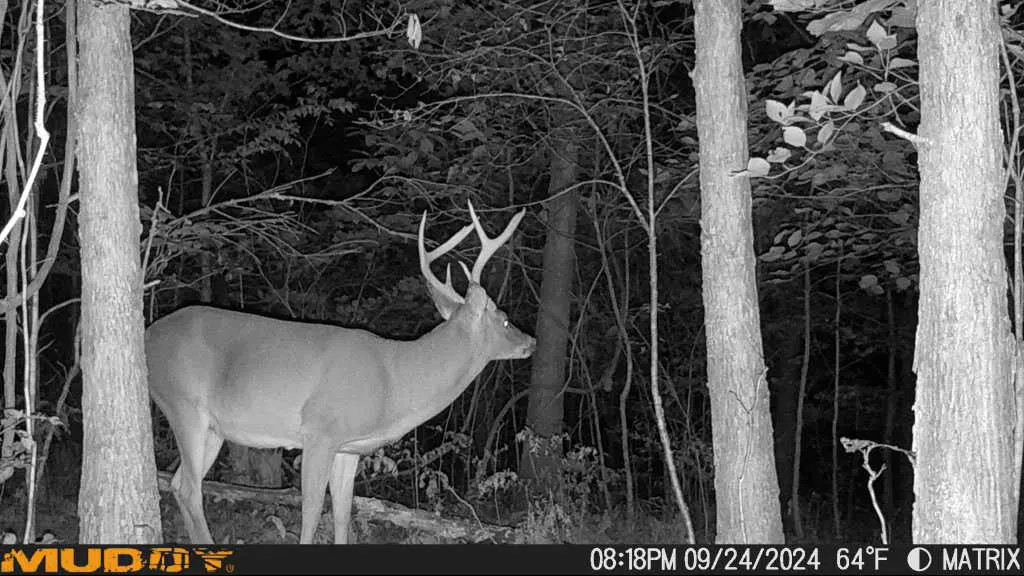
During this period, bucks often check scrapes throughout the day, particularly during late morning and early afternoon. As they roam their territory, they freshen up scrapes or check them for doe scent. After a heavy rain is also an excellent time for bucks to be out freshening up their scent that has been washed away. This is also my favorite time to use scents in scrapes and mock scrapes to mess with the territorial instincts of bucks. Using a scent such as Buck Bomb’s Primetime Rut Kit with a Scent Hammock can increase the activity of bucks and keep them close by. Pre-rut is also when bucks use rub lines, especially along trails between bedding and feeding areas. These travel corridors become high-traffic zones, especially at first light and dusk.
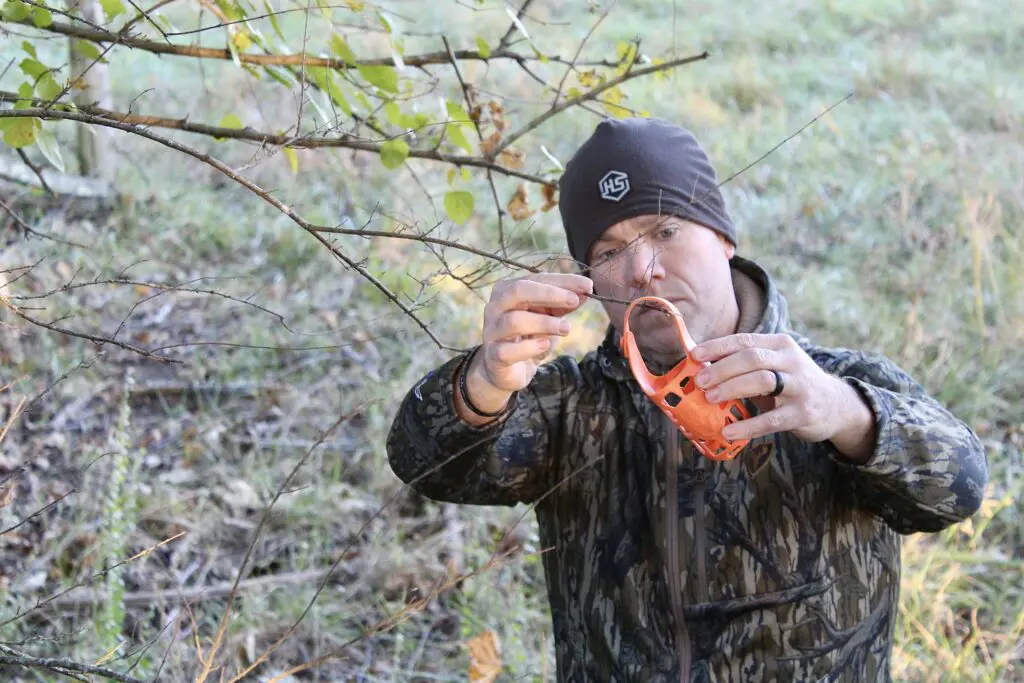
As pre-rut peaks, bucks begin chasing does, so focusing on scrapes in areas where doe movement is high can increase your odds.
Peak Rut – Mid-November to Early December
Once the rut is in full swing, scrapes and rubs may take a back seat to the primary focus of bucks: finding and breeding does. Typically, hunters know when the rut is in full swing because bucks that were showing up on their Muddy cameras at scrapes suddenly disappear, as they are now actively seeking does. Buck movement becomes erratic, and they may travel long distances, abandoning normal patterns to find a mate; this is when hunting becomes good due to the uncertainty of when and what buck will show up at any given time.
During the peak rut, all-day hunting can pay off, as bucks are constantly searching for does. Setting up near areas where does bed or in natural funnels and pinch points that force bucks to pass through as they travel between different bedding and feeding zones become hot spots to hunt. Bucks are less likely to refresh scrapes during the peak rut but will still use rub lines as they travel.
Though bucks may be more preoccupied with does than marking territory, they still check scrapes and rub lines occasionally. Finding a scrape or rub in a high-traffic doe area is a great setup spot.
Post-Rut – Late December to Early January
Once the rut starts to wind down, buck activity decreases as they recover from the exhaustion of chasing does. However, some bucks may still be on the lookout for late breeding does. Scrapes and rubs can become active again, though not as intensely as in the pre-rut or peak rut phases.
Bucks that haven’t yet bred or are still feeling the effects of the rut will often visit scrapes during the post-rut. Setting up near scrapes in feeding areas can yield late-season success.
Rub lines leading to bedding areas can still be productive as bucks transition back into feeding-heavy patterns to regain energy.
Additional Tips for Hunting Scrapes and Rubs
- Focus on active scrapes: Look for scrapes with fresh tracks, scent, and broken branches overhead. Bucks are more likely to visit these scrapes regularly.
- Pay attention to terrain: Hunting rub lines along natural funnels, ridges, and field edges can increase your chances of seeing buck activity.
- Use trail cameras: Place cameras near scrapes and rubs to get an idea of what time of day bucks are visiting the area.
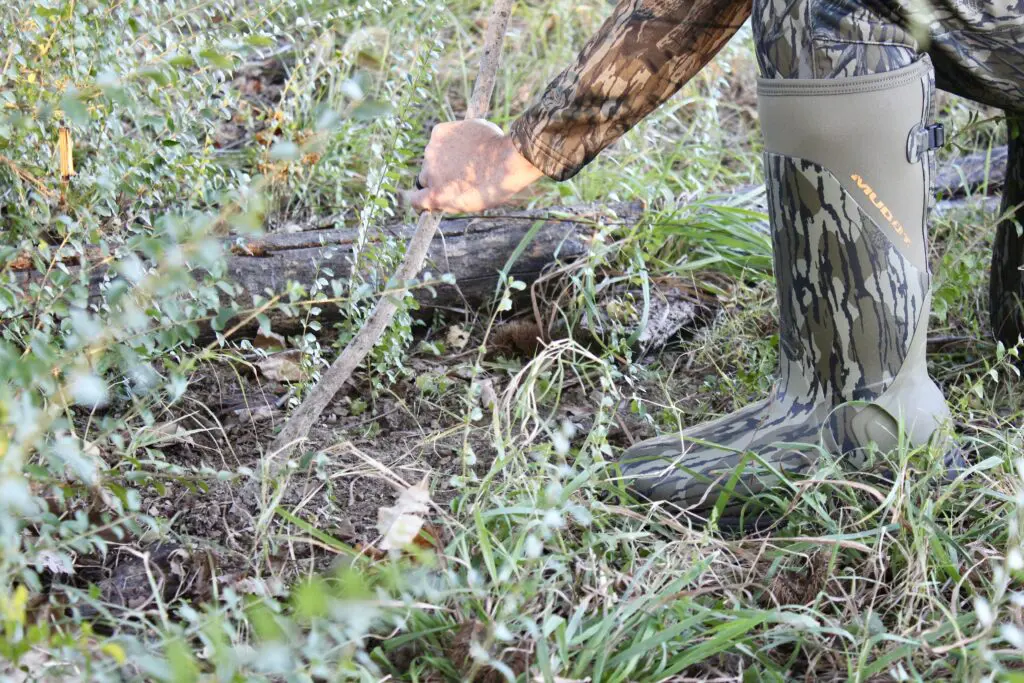
- Scent Control: Bucks rely heavily on their sense of smell when checking scrapes, so keeping your scent to a minimum is crucial. Use scent-eliminating sprays, such as Scent-A-Way, and be mindful of human scent by wearing rubber boots, such as the new Muddy DV8 17” Insulated Boots, that are easier to eliminate scent and keep clean when making mock scrapes and hunting.
Timing your hunt for scrapes and rubs can make all the difference when pursuing mature bucks. Understanding the different phases of the rut and how deer interact with scrapes and rubs throughout the season can help you pick the right spot at the right time. While the pre-rut and early parts of the season are prime times for hunting scrapes and rub lines, remaining adaptable and hunting all day during peak rut can lead to success.
By paying attention to sign, terrain, and deer behavior, you’ll be well-equipped to capitalize on the buck activity around scrapes and rubs this season.